

It’s a walk down to campus, a glaring song in her ears.
Bellowing vocals strike an impulse in her gut, she considers; what might it be like to dance? She begins to think about movement, what it means to her, and, consequently, its restrictions. She is a body, a woman, and an artist. She was once a dancer. She is now a director.
The Director enjoys being watched, but not perceived. She knows the difference between entertainment and exploitation. She creates an art, now separate from herself, with the hope to give someone something to think about. She wants to make art that’s truthful, so she looks to the world. She picks up more hobbies, minors in classics, learns about Choreomania, thinks about Medieval women and their tendencies to dance sporadically in the streets. Every time she looks at the world she ends up spotting herself.
The Director ignores the endeavors and removes herself from creation. She picks up a job on campus. She considers it a character study; various personalities bonded together by long hours and the savory scent of a paycheck. She enjoys the rare instance of monotony. No film-major-archetypal-garb could coil the satisfaction of the thrice a week khaki/polo combo. She succumbs to the clutch of capitalistic anonymity. She is invisible, quiet, and observational. She is mindless, pre-sentient, as personless as one can be, yet somehow she is still looked at found
and touched.
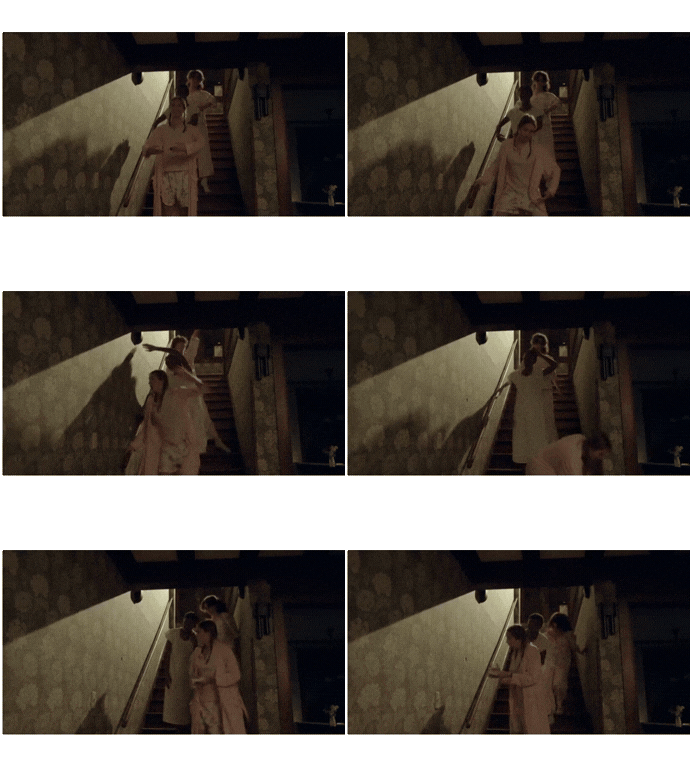
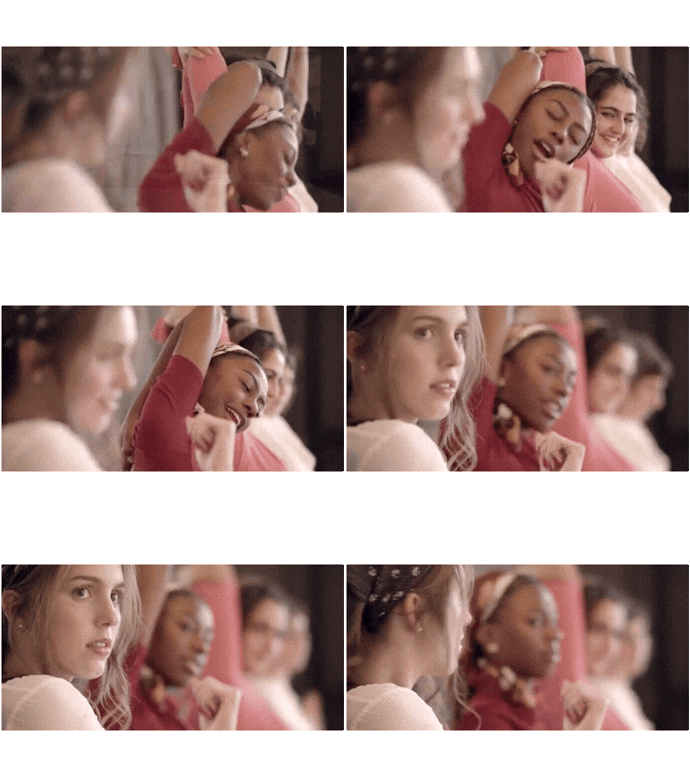
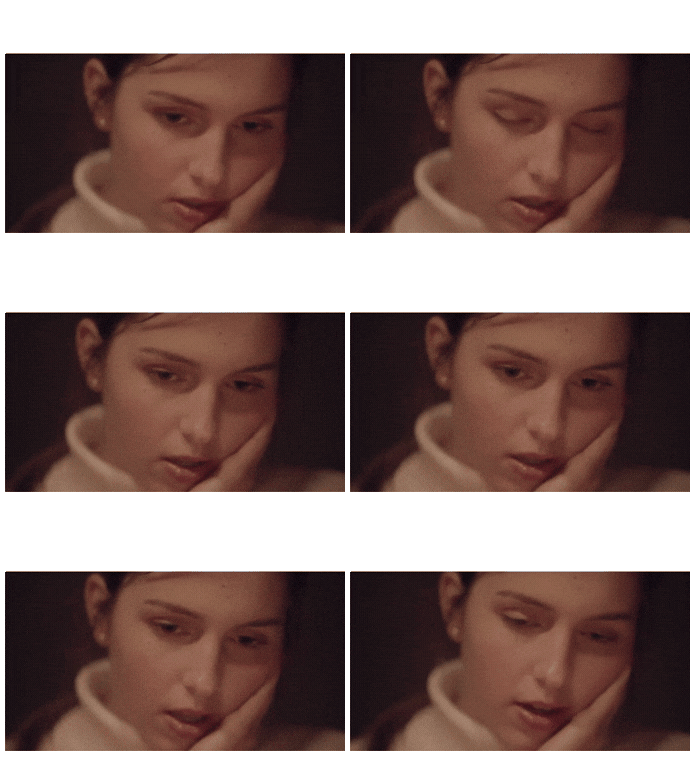
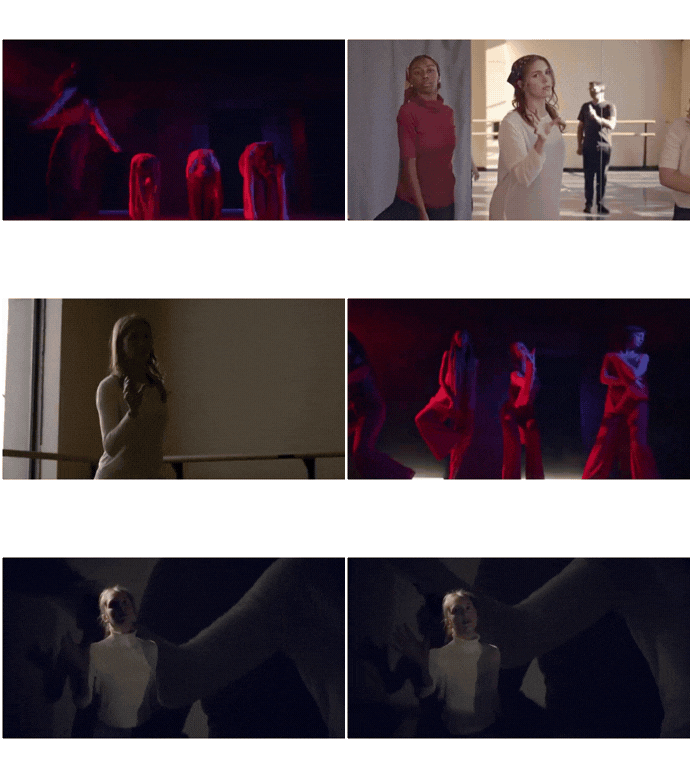



A hold and a tug and she is suddenly someone new. The Director looks less in the mirror. She makes herself smaller, wears more clothing, hopes not to give an indication of anything other than work.
She is not just touched this time, but kissed.
She quits her job.
She spirals into madness,
sinks into music.
She listens to songs like screaming, dreaming of dancing it away. She fantasizes in visions of spiders and red.
It’s inevitable, she thinks, it’s a film.
The ambiguity of the meaning and stakes has led to discussion beyond the film itself. This film proves an individual’s personal experience influences their understanding of someone else’s response. The ending of Invasions has been an impactful and powerful service to those who understand what it feels like to not have control over the way you are perceived and touched. To others, it has been an intimidating confrontation towards their own behavior and reflection on their interactions with others.
I have watched this film a thousand times. I have relived my own experience visually, sonically, verbally, through the interpretation of someone else. I never understood what it meant to put your heart into a project until Invasions. In order for this film to be impactful, I had to feel the potency of that moment grow in every version of the edit; I had to allow myself to be affected by Emilia’s story day after day. This process was extremely challenging. It was tedious and ignited by ambition and adrenaline, and it took up the majority of my brain’s capacity for over a year.
Regardless of its demand, this has by far been the most rewarding directing/filmmaking experience thus far. I now know the amount of myself I can give of myself to a project, and how it can really benefit a story to give yourself into the process of making it. I can only hope that, with more time and experience, I can continue to expand on the themes at the core of Invasions as I continue to explore the medium of filmmaking. The love I have for this project and the process of making it has been a beautiful conclusion to my academic experience and an incredibly encouraging beginning to the start of a new chapter of filmmaking in my life.